The Concept

Foundational definition of the practice.


Bespoke Vienna is a curatorial and cultural guiding practice that approaches living heritage as a source of orientation. Heritage is not treated as decoration, nostalgia, or narrative material. It is understood as accumulated knowledge embedded in objects, spaces, and practices that shape how individuals and institutions perceive, decide, and act over time.

The work restores clarity where contemporary life often loses it. Environments may function smoothly and appear refined, yet feel unanchored. The issue is not quality alone, but the absence of continuity and embedded intent. When these are missing, even the best surroundings become interchangeable. Bespoke Vienna makes visible what endures beneath surface value.

This practice does not create strategies, campaigns, or narratives. It does not manufacture identity. Its role is to clarify what is already present but often overlooked: cultural substance, continuity, and intent carried forward responsibly.

Rooted in Vienna’s living ecosystems of craftsmanship, the work is not bound to place. Vienna is a field of practice, not a style. The method applies wherever heritage, material knowledge, and human presence intersect.

At its core, Bespoke Vienna restores orientation through discernment, restraint, and attention to what has been shaped to endure.

The Principles

The Principles

Foundational convictions that guide conduct.


The work of Bespoke Vienna is guided by a small set of foundational convictions. They are not aspirations. They are operating conditions.

Heritage is not decoration.

It is an orientation system. Engaged responsibly, it shapes coherence, decision making, and human experience over time. Reduced to surface reference, it loses meaning and integrity.

Meaning can not be manufactured.

It emerges when what is already present is named with precision. Explanation, embellishment, and performance weaken substance rather than strengthen it.

Action without orientation produces noise.

This work insists on clarity before execution. Acting before seeing amplifies misalignment instead of resolving it.

Restraint protects depth.

Not everything that can be articulated should be articulated. This practice avoids turning substance into content, spectacle, or narrative output.

Continuity carries responsibility.

Engaging with heritage, craftsmanship, and accumulated knowledge requires care, respect, and discernment. The work stops where integrity would be thinned by scale, speed, or display.
The Responsibility

The Responsibility

Ethical Commitments Behind the Work.


Every engagement undertaken by Bespoke Vienna is approached with care, discretion, and respect for what must remain intact. The work does not trade in trends, shortcuts, or performative gestures. It avoids spectacle and refuses to instrumentalize heritage, craftsmanship, or human experience for effect.

Cultural substance carries weight. Engaging with it requires restraint, sensitivity, and an understanding of limits. Not everything that can be accessed should be displayed. Not everything that can be articulated should be articulated. The work stops where depth would be thinned by exposure, simplification, or scale.

Bespoke Vienna does not impose solutions or prescribe outcomes. It does not seek to optimize, accelerate, or amplify. Its responsibility is to make visible what is already present, allowing clarity to emerge without coercion or performance.

This applies equally to institutions and individuals. Participation requires seriousness on both sides. The work proceeds only where care, attention, and integrity can be upheld throughout.

Responsibility here is not an added layer. It is the condition that allows the work to exist at all.

The Custodian
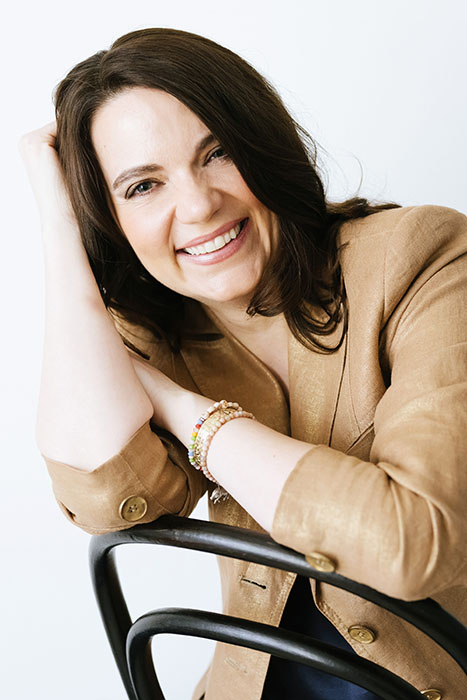
Portrait of the site owner, Barbara.

The Custodian

The Person Responsible for the Work.


Bespoke Vienna is guided and held by Barbara Lanz, MA.

This practice is grounded in a simple, non-negotiable observation: as long as human life is lived in bodies, orientation cannot be separated from material reality. Objects, spaces, and crafted environments are not neutral. They shape perception, attention, and a sense of belonging long before they are consciously noticed.

Barbara’s background spans international cultural and conference management and technical sciences research, with academic grounding in art history and political science. To deepen her understanding of material culture, she earned a Master’s Degree in Fine and Decorative Art from the Sotheby’s Institute of Art in London.

Her work is informed by long-term engagement with craftsmanship, continuity, and the quiet intelligence embedded in well-made things. It draws equally on scholarly rigor and lived experience, moving between cultural analysis, material knowledge, and human perception without collapsing one into the other.

Custodianship, in this context, is a responsibility rather than a role. The work cannot be delegated, automated, or scaled without loss. Every engagement is approached personally, with care for integrity, context, and what must remain intact. The practice proceeds only where seriousness, attention, and restraint can be upheld.

Bespoke Vienna exists to protect and make visible what endures, not as nostalgia or performance, but as lived, tangible orientation in a world that too often forgets the weight of the real.