Lambert Hofer
The Wardrobe of World History
1. Identity & Presence
Lambert Hofer is one of the world's most prestigious costume houses, serving as a vital partner for international film, opera, and theatre productions for over 160 years. Founded in 1862 as the „Erste-Costüm-Leihanstalt Lambert Hofer,“ the company is today led by Peter Hofer and his daughter Cornelia Hofer in the fourth and fifth generation. Located in a meticulously renovated facility at Simmeringer Hauptstraße 28, 1110 Vienna, the house remains a family-run bastion of artisanal heritage and theatrical expertise. With an archive of approximately 1,000,000 costumes, the company fulfills the sophisticated demands of leading designers and directors worldwide. Their primary contact is +43 1 749 61 27 or office@lamberthofer.at, and their online presence is www.lamberthofer.at.
 Company Lambert Hofer on Instagram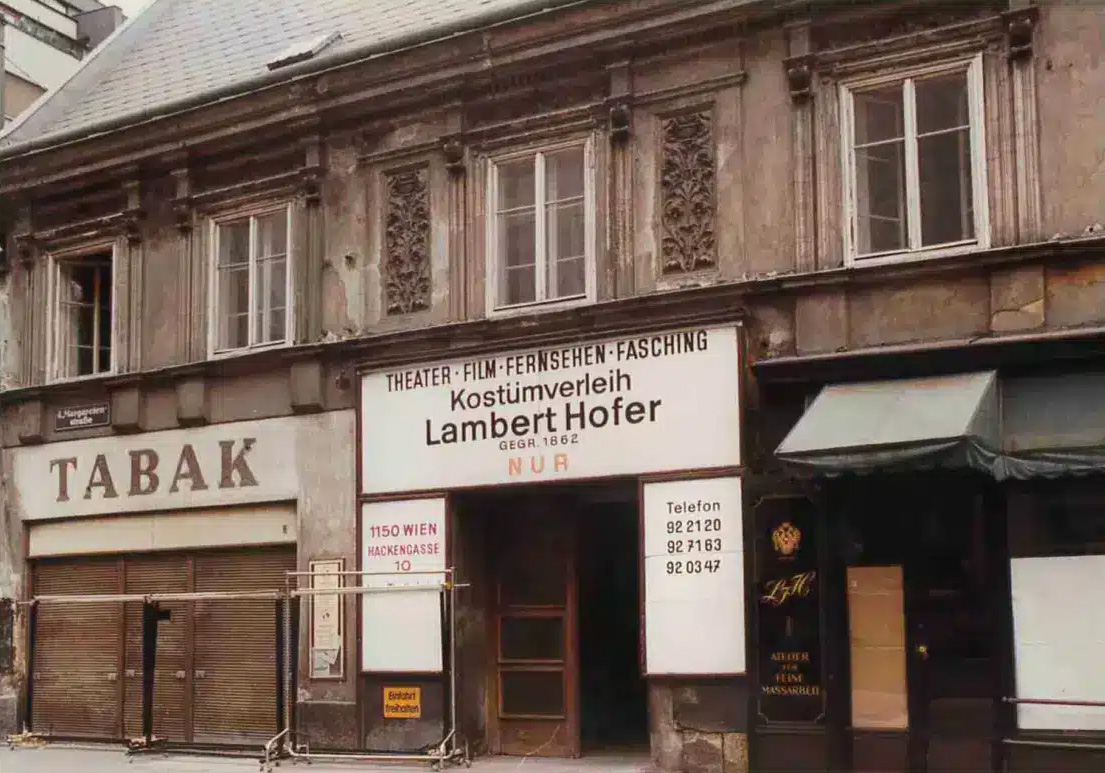
2. The Origin Story & Historical Milestones
The history of the house is rooted in the artisanal excellence of the 19th-century Viennese theatre world.
- The Founder's Journey: Lambert Hofer I gained his first experiences at the Theater an der Wien from 1848 before becoming a master tailor at the k. u. k. Hofburgtheater in 1850. In 1862, following creative differences, he founded the city’s first mask and costume rental agency. The business began modestly in a 35-square-meter workshop on Magdalenenstraße (6th district) with an initial inventory consisting only of a single pair of black trousers and a floral decorative curtain.
- The Makart-Festzug: A significant historical highlight for the house was its involvement in the legendary Makart-Festzug of 1879. Lambert Hofer played a leading role in outfitting this monumental procession, which celebrated the silver wedding anniversary of Emperor Franz Joseph I and Empress Elisabeth, marking a high point in Viennese artisanal and cultural history.
- A Supra-Regional Reach: Early in its history, the company established a reputation that reached far beyond the city limits of Vienna. Historical records confirm that even before 1900, Lambert Hofer was already outfitting theatre performances in various distant regions of the Habsburg Monarchy, demonstrating an extraordinary logistical capability for the era.
- Expansion & Silent Film: A major milestone occurred in 1920 when Lambert Hofer equipped its first film for Graf Sascha Kolowrat. This success cemented the company's bond with the burgeoning cinema industry, leading to iconic contributions to films such as "Sodom and Gomorrah" (1922).
- Artisanal Depth: Historical records from the late 1940s highlight the extraordinary scale of the house, which supplied costumes for over 120 premieres in a single season. During this era, the house even maintained its own hand-printing workshop (Handdruckerei), using proprietary molds to create bespoke textile patterns, ensuring the highest level of historical accuracy.
- Strategic Fusions: Over the decades, the house expanded by acquiring competitors like „Wiener Theaterkunst“ and „Ella Bei.“ In 1983, the final merger with Wiener Theaterkunst necessitated a consolidation of their vast, scattered archives.
- A Modern Landmark: In 1989, Peter Hofer decided to bring all branches under one roof. He acquired and restored a dilapidated property in Simmering, which became the company’s current headquarters in 1990. Following Austria’s EU accession in 1995 and joining the Madrid-based Peris Group in 2019, Lambert Hofer has further strengthened its position on the international market.
3. The Core of the Craft
The philosophy of Lambert Hofer is built on a simple but powerful internal motto: "There is nothing we cannot achieve as long as we do it together!" This collaborative spirit forms the heartbeat of the house, seamlessly uniting the vast scale of the archive with the intimate precision of the workshops.
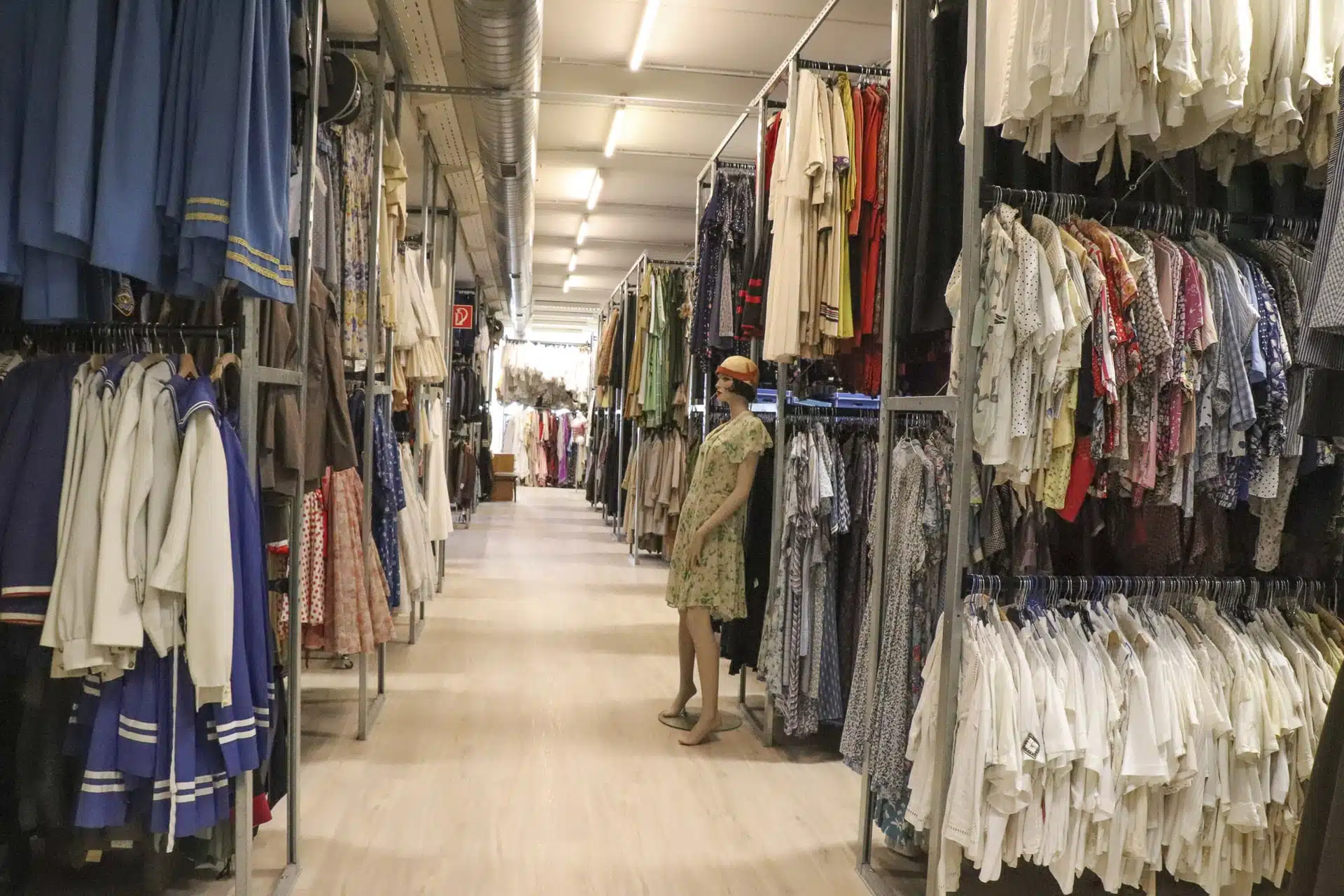
- The Archive (The "Fundus"): The heart of the company is its vast archive, spanning epochs from the Middle Ages to the present day. This collection is a working library of fashion history, featuring one million individual pieces. A defining characteristic is the presence of thousands of original costumes and uniforms dating back to 1780, which are made available for film productions in selected cases. The archive is meticulously organized by epoch and colour, enabling high efficiency and professional equipment of complex projects within short timeframes.
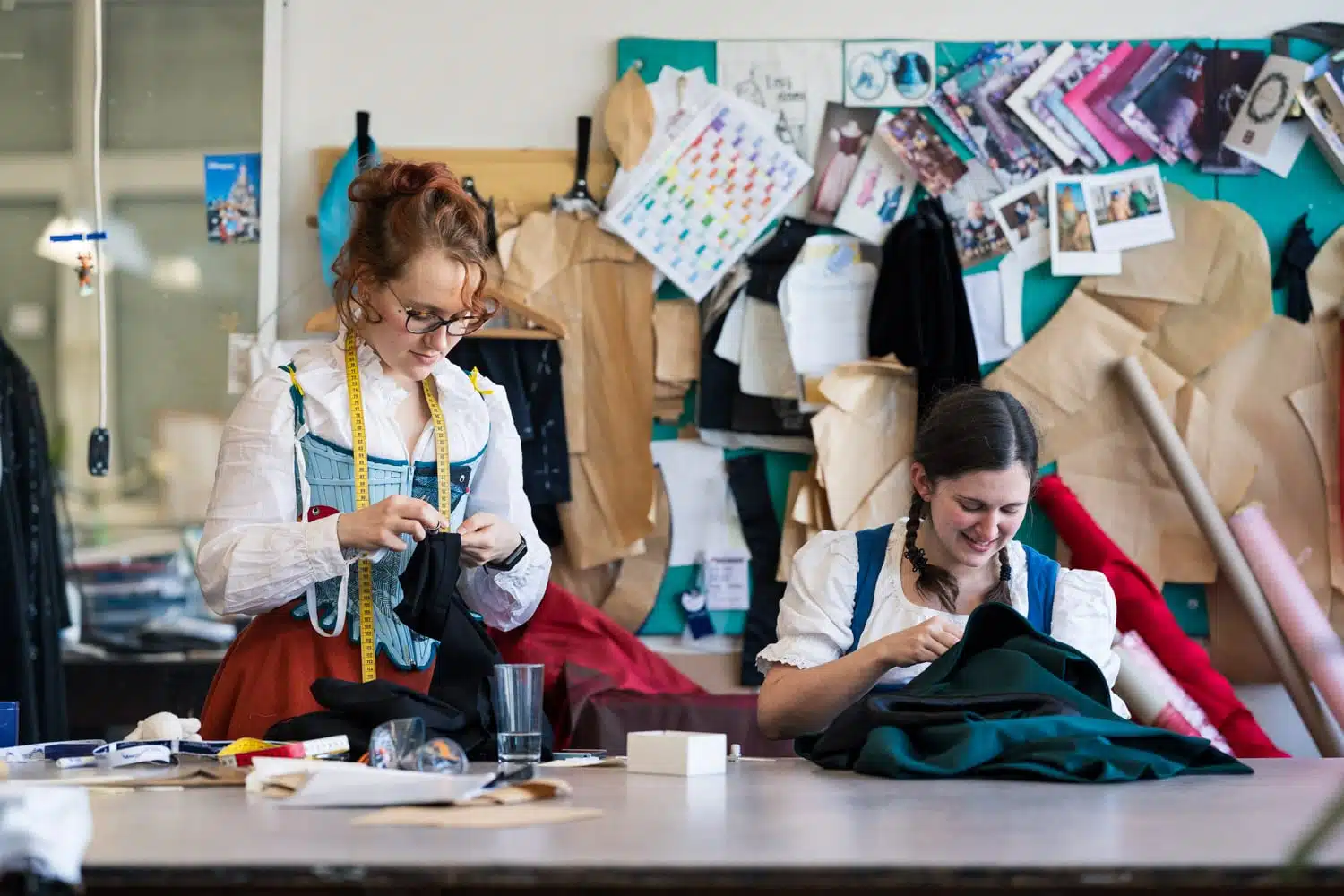
- The Artisanal Ateliers: Central to the house’s excellence are the in-house ateliers, consisting of dedicated ladies' and gentlemen's tailoring workshops and a specialized millinery (Modisterei). The team possesses a unique expertise in historical uniforms – a niche skill that requires precise knowledge of rank insignia and period-appropriate placement. This creative passion is combined with modern digital services: the house now offers remote support by sending high-quality photographic curations of pieces to international costume designers working from Hollywood or London.
- Production Infrastructure: A unique feature of the Simmering headquarters is the provision of dedicated production and rehearsal suites. International film crews can utilize these versatile spaces for costume fittings, camera tests, and make-up rehearsals. The facility is equipped with professional amenities – including specialized textile aging and distressing (Patinieren) stations – allowing productions to manage their creative and administrative workflows entirely on-site.
- Bespoke Restoration: Master tailors in the in-house workshops not only create new pieces but also meticulously restore historical garments, ensuring they meet the visual requirements of modern high-definition cinematography.
- Textile Care & Preservation: A discreet but vital pillar of the house is its profound expertise in textile maintenance. To preserve a century-old archive, the company has historically utilized the most advanced preservation methods to protect irreplaceable and fragile fabrics from organic decay.
- The Evening Wear Tradition: Through Lambert Hofer Junior, the house remains a cornerstone of Viennese Ball Culture, providing premium rentals of tailcoats (Frack), dinner jackets (Smoking), and evening gowns, now supported by an efficient online rental system for private guests.
4. Enduring Legacy & Resilience
Lambert Hofer’s resilience lies in its ability to navigate over 160 years of technical and economic shifts without compromising its core values.
- Cultural Guardianship: The company’s role as a protector of Viennese tradition was officially recognized as early as 1930, when Lambert Hofer was honoured by the „Alt-Wiener Klub“ for his outstanding merits in the preservation of old Viennese customs and traditions. On this occasion, he was presented with a silver engraving of the old Burgtheater, a symbolic tribute to the house's deep roots in the city's theatrical soul.
- Global Impact: From providing costumes for 19th-century processions to outfitting the monumental 1950s production of the Austrian "Sissi" trilogy and Hollywood classics like "The Third Man" and "Amadeus", the house has remained a constant in the world of storytelling. The archive houses legendary "hero pieces" such as the coronation mantle worn by Karlheinz Böhm in Sissi and the culturally specific Tibetan robes worn by Brad Pitt in Seven Years in Tibet. Their unique combination of historical consulting, bespoke tailoring, and expert textile preservation ensures that every production possesses visual integrity and lasting quality.
5. Vision for the Future
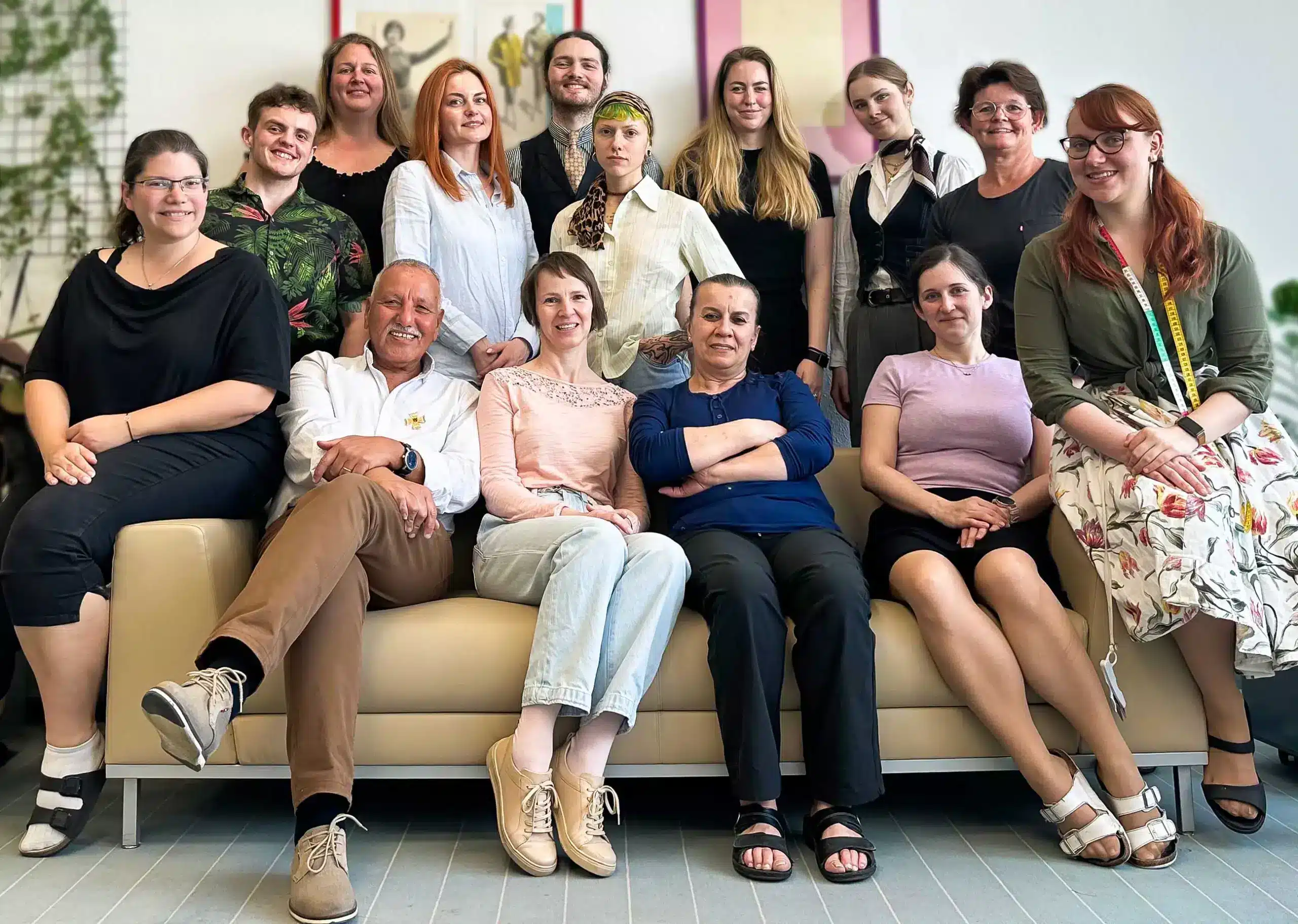
Under the stewardship of the fourth and fifth generations, the vision is to honour the founder’s legacy while evolving into a global full-service hub for the entertainment industry.
- Global Network & Synergy: As an integral part of the Peris Group, the house leverages a worldwide network of costume houses. This allows for seamless logistical cooperation, enabling Lambert Hofer to serve massive international productions with unparalleled speed and variety.
- Adapting to Global Demand: The ongoing expansion of specialized production and rehearsal infrastructure underscores the company’s evolution. By increasing its on-site capacity and integrating digital curation, Lambert Hofer is keeping pace with the rising international demand for professional workspaces that allow creative teams to bridge the gap between historical consulting and practical preparation.
- Preserving Knowledge: A key focus remains the passing down of specialized artisanal knowledge. By training new generations in the art of historical cuts, fabric types, and the specific "patina" required for period authenticity, the house ensures that the "soul" of Viennese craftsmanship remains relevant in an increasingly digital world.
- The Personal Touch: Despite its global scale, the business remains a family-led enterprise. Personal consultation and traditional Viennese tailoring standards continue to define the "Lambert Hofer experience," ensuring that every client receives the same meticulous attention that Lambert Hofer I provided over a century ago.